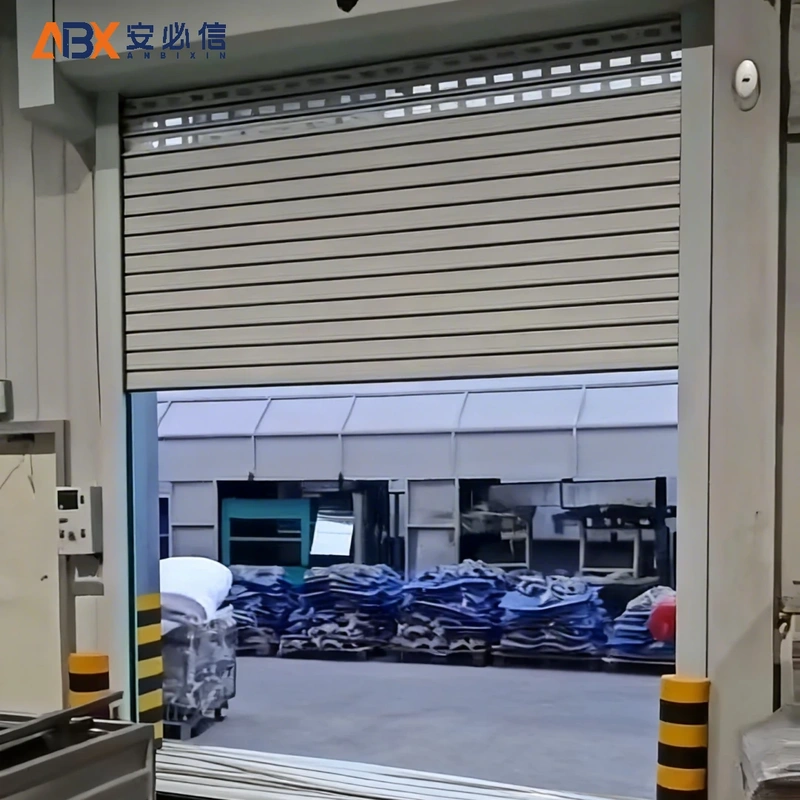
Preventive maintenance of a rigid high-speed door is a set of inspections and replacements scheduled from the logged cycle count and the site conditions. It covers the guides, the slat hinges, the balance system, the bottom seal, the safety devices and the drive, with the interval set by use rather than by the calendar alone.
Why the calendar is the wrong basis
Two doors of the same model in the same plant can differ by a factor of ten in cycle count. A calendar-based visit either services the busy door too late or the quiet door too often. The controller's cycle counter gives the real figure.
| Cycle count since last visit | Action | Reason |
|---|---|---|
| Below 20,000 | Inspect and adjust, no replacement expected | Wear parts still within tolerance |
| 20,000 to 60,000 | Inspect, lubricate, replace bottom seal if worn | Seal and rollers reach their practical limit |
| 60,000 to 120,000 | Replace rollers and hinge pins, check balance | Hinge line and carrier wear becomes measurable |
| Above 120,000 | Overhaul guide and balance, inspect slat faces | Accumulated wear affects alignment and sealing |
The inspection list
Most of the items below are found by looking, not by testing. The list is the normal inspection scope for a high-cycle door.
- Guides: wear strips, alignment, debris, fixing tightness.
- Slat hinges: play, lubrication, alignment across the curve.
- Balance system: holding force at mid-travel, spring or counterweight condition.
- Bottom seal: compression, cuts, airbag integrity, even contact across the width.
- Safety devices: reversal test, photocell alignment and lens condition.
- Drive: brake response, motor temperature, ramp behaviour, fault log.
- Structure: fixing anchors, header beam, wall junction and sealant.
What to replace rather than inspect
Some items are consumables and should be replaced on condition rather than monitored until failure: the bottom seal, the guide wear strips and the photocell lenses. Holding them in stock converts a day-long stoppage into a one-hour repair.
Hinges and rollers sit between consumable and structural. They are replaced when play is measurable, which is why the inspection record needs a measurement rather than a tick box.
Records that shorten the next visit
A service record with cycle count, measurements, replaced parts and settings is worth more than a signed sheet. It shows the wear rate, predicts the next replacement and tells the next technician what was already tried.
The photo of the guide wear pattern at each visit is the single most useful item, because it distinguishes misalignment from material wear.
Seasonal items
Condensation and frost change the maintenance requirement in winter on a cold-store boundary. Guide heating, threshold drainage and seal condition should be checked before the cold season rather than after the first ice-related stoppage.
Building the first-year plan
The first year sets the wear rate for the life of the door. A plan that starts with a short interval and extends it as the data accumulates is more accurate than a fixed annual visit.
The practical sequence is a visit at the first few thousand cycles to check alignment and seal contact, a second visit at roughly a quarter of the expected annual count, and then an interval derived from the wear observed at those two. Recording the cycle count at each visit is what makes the extension defensible, and it also shows whether a change in production pattern has altered the duty.
Seasonal checklist for the cold months
Before the cold season, confirm that guide heating reaches temperature, that the threshold drain is clear, and that the bottom seal is still flexible rather than hardened by cleaning agents. Those three checks prevent most of the winter stoppages recorded on refrigerated openings.
Related guides in this series
The following pages cover the adjacent decisions in the same product family, so the specification can be reviewed end to end.
- Diagnosing unplanned stops
- Safety devices and EN 12453
- Turbine construction and guide wear
- Cold store interfaces and frost
References to verify before ordering
The table lists the references that normally change the selected configuration. It is a specification checklist, not a certification statement for any particular installation; the applicable class is confirmed against the measured opening and the site conditions.
| Reference | What has to be confirmed |
|---|---|
| EN 12453 | Reversal function tested at each visit |
| EN 12604 | Mechanical condition of guides, hinges and fixings |
| EN 13241 | Product standard and the manufacturer's service requirements |
| EN 12978 | Condition of the protective devices |
| EN ISO 13849-1 | Functional test of the safety-related control parts |
Frequently asked questions
How often should a high-speed door be serviced?
The interval follows the logged cycle count and the environment. A busy external door may need a visit every few weeks; a quiet internal door can go a year.
Which parts should be kept in stock?
A bottom seal, guide wear strips, carrier rollers, a small number of slats and a spare photocell pair. Those cover most unplanned stops.
Can maintenance be done without stopping production?
Inspection can, replacement usually cannot. Planning a short window at a known cycle count is cheaper than an unplanned stoppage.
What should the service report contain?
Cycle count, measurements of wear items, parts replaced, safety test result and the commissioned settings if they were changed.
Gallery